
Receiving a referral to an oncologist or hearing the word “cancer” can bring many emotions, including fear, uncertainty, and confusion. If you are preparing for your First Oncology Consultation, you may be wondering what will happen during the appointment, what information you need to bring, and what questions you should ask.
The good news is that your first visit is designed to help you understand your diagnosis, discuss available treatment options, and create a personalized care plan. Rather than beginning treatment immediately, this consultation is usually focused on gathering important medical information, reviewing test results, and helping you make informed decisions about your care.
Knowing what to expect before your appointment can help reduce anxiety and ensure that you get the most value from your consultation. This guide explains every stage of the First Oncology Consultation so that you and your family can feel more prepared and confident.
Table of Contents
- What Is a First Oncology Consultation?
- Why Is the First Oncology Consultation Important?
- When Should You Schedule Your First Oncology Consultation?
- How to Prepare for Your Appointment
- What to Bring to Your Consultation
- What Happens During the Consultation?
- Questions Your Oncologist May Ask
- Questions You Should Ask
- Understanding Your Treatment Plan
- Common Tests Recommended
- Emotional Support During Cancer Care
- Tips for a Successful Consultation
- Frequently Asked Questions
- Conclusion
What Is a First Oncology Consultation?
A First Oncology Consultation is your initial appointment with an oncologist—a doctor who specializes in diagnosing and treating cancer. During this visit, the oncologist carefully reviews your medical history, diagnostic reports, symptoms, and overall health before recommending the most appropriate treatment approach.

This appointment is an opportunity to understand your condition and discuss any concerns you may have. Your oncologist will explain your diagnosis in simple terms, review available treatment options, and outline the next steps in your care.
Unlike a routine medical check-up, an oncology consultation focuses on developing a personalized treatment strategy based on your specific type of cancer, its stage, and your overall health.
Key Goals of the First Oncology Consultation
- Confirm or review your diagnosis.
- Understand your symptoms and medical history.
- Review biopsy, imaging, and laboratory reports.
- Determine whether additional tests are needed.
- Discuss possible treatment options.
- Answer your questions and address your concerns.
- Develop a personalized treatment plan.
Key Takeaway: Your first consultation is primarily about evaluation, education, and planning. In many cases, treatment begins only after all necessary information has been reviewed.
Why Is the First Oncology Consultation Important?
The first consultation lays the foundation for your entire cancer care journey. Every patient is unique, and effective treatment begins with a thorough understanding of your medical condition.
During this visit, your oncologist evaluates several factors, including:
- The type of cancer.
- The stage of the disease.
- Your current symptoms.
- Your age and general health.
- Existing medical conditions.
- Previous treatments or surgeries.
- Family history of cancer.
This comprehensive evaluation helps your healthcare team recommend the treatment approach that is most appropriate for your individual situation.
Benefits of the First Oncology Consultation
Clear Understanding of Your Diagnosis
Medical reports can often contain complex terminology. Your oncologist will explain your diagnosis in language that is easier to understand, helping you gain clarity about your condition.
Personalized Treatment Planning
Cancer treatment is not one-size-fits-all. Your treatment plan will be tailored to your diagnosis, health status, and personal preferences.
Opportunity to Ask Questions
This consultation gives you the chance to discuss your concerns openly. Whether you have questions about treatment, side effects, recovery, or lifestyle changes, your oncologist is there to guide you.
Building Trust With Your Care Team
Cancer treatment often involves ongoing communication with your healthcare team. Establishing a strong relationship from the beginning can help you feel more comfortable throughout your treatment journey.
When Should You Schedule Your First Oncology Consultation?
Your doctor may recommend seeing an oncologist in several situations. Scheduling an appointment promptly allows your healthcare team to evaluate your condition and plan the next steps without unnecessary delays.
You may need a First Oncology Consultation if:
- A biopsy confirms cancer.
- Imaging tests such as a CT scan, MRI, or PET scan show suspicious findings.
- Your primary care physician or specialist refers you for further evaluation.
- You have persistent symptoms that require investigation.
- You would like a second opinion regarding your diagnosis or treatment options.
- You have a strong family history of certain cancers and require specialist advice.
Early consultation can help ensure that appropriate investigations and treatment planning begin as soon as possible.
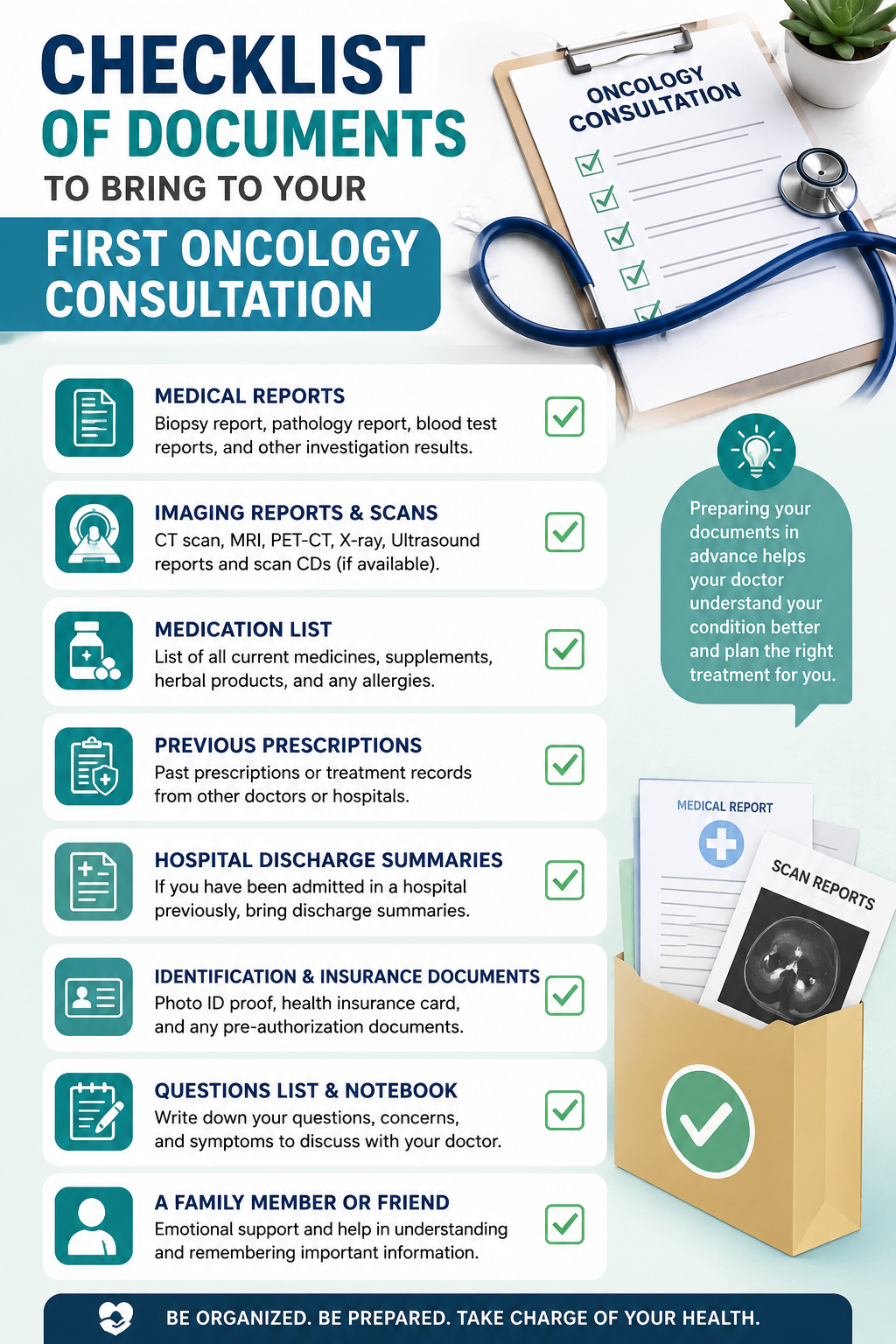
How to Prepare for Your First Oncology Consultation
Preparing in advance can make your appointment more productive and help you feel more confident. Organizing your medical information and writing down your questions ahead of time can ensure that important details are not overlooked.
Collect Your Medical Records
Bring copies of all relevant medical documents, including:
- Biopsy reports
- Blood test reports
- CT scan reports
- MRI reports
- PET-CT scan reports
- Ultrasound reports
- Previous prescriptions
- Hospital discharge summaries
- Pathology reports
Having these records available allows your oncologist to review your case thoroughly.
Write Down Your Symptoms
Before your appointment, note details about:
- When your symptoms began.
- How often they occur.
- Whether they are getting worse.
- Any pain or discomfort.
- Weight loss or fatigue.
- Other health concerns.
Providing accurate information helps your doctor better understand your condition.
Prepare a List of Medications
Include all prescription medicines, over-the-counter medications, vitamins, supplements, and herbal products you currently take. Also mention any known allergies or previous reactions to medications.
Bring a Family Member or Friend
Having someone accompany you can provide emotional support and help you remember important information discussed during the consultation. They can also assist by taking notes and asking additional questions if needed.
What to Bring to Your First Oncology Consultation
Being organized can help your appointment run smoothly. Consider bringing the following items:
| Item | Why It Is Important |
|---|---|
| Medical reports | Helps review your diagnosis and previous findings |
| Imaging scans or CDs | Allows detailed evaluation of imaging results |
| Medication list | Prevents potential drug interactions |
| Insurance documents | Assists with administrative processes |
| Identification documents | Required for hospital records |
| Notebook and pen | Useful for taking notes during the consultation |
| List of questions | Ensures all your concerns are addressed |
Preparation Tip: Keep all your reports and documents in a single folder so they are easy to access during your appointment.
Questions Your Oncologist May Ask
During your First Oncology Consultation, your oncologist will ask questions to gather a complete picture of your health.
Common questions include:
- When did your symptoms first begin?
- Have your symptoms changed over time?
- Have you experienced unexplained weight loss?
- Do you have pain, fatigue, or difficulty eating?
- Has anyone in your family been diagnosed with cancer?
- What medications are you currently taking?
- Have you had any previous surgeries or cancer treatments?
- Do you smoke or consume alcohol?
- Do you have any other medical conditions?
Answering these questions honestly helps your healthcare team recommend the most appropriate treatment plan.
Frequently Asked Questions
How long does a First Oncology Consultation usually take?
The duration varies depending on your medical history and the complexity of your case. Many first consultations take between 30 and 60 minutes, though some may be longer if extensive discussions or report reviews are needed.
Will treatment begin during my first visit?
Not always. Your oncologist may recommend additional tests before finalizing a treatment plan. If all necessary information is available, treatment planning may begin during the consultation.
What documents should I bring?
Bring all relevant medical reports, biopsy results, imaging studies, blood test reports, previous prescriptions, a list of medications, identification documents, and any referral letters.
Should I bring someone with me?
Yes. A trusted family member or friend can provide emotional support, help take notes, and assist in remembering important information discussed during the appointment.
Can I ask for a second opinion?
Yes. Seeking a second opinion is a personal decision and is often encouraged when patients want additional clarity about their diagnosis or treatment options.
What if I don’t understand my diagnosis?
Let your oncologist know. They can explain your condition in simpler language, use diagrams if needed, and answer your questions to help you better understand your diagnosis.
Conclusion
Your First Oncology Consultation marks an important step in your cancer care journey. While it is natural to feel uncertain or anxious, being prepared can make the experience more reassuring and productive.
By bringing your medical records, preparing questions, and understanding what to expect, you can actively participate in discussions about your diagnosis and treatment options. Remember that every treatment plan is personalized, and your oncology team is there to support you at every stage.
Open communication, informed decision-making, and a strong partnership with your healthcare providers can help you move forward with confidence. If you or a loved one has been referred to an oncologist, use your first consultation as an opportunity to gain clarity, discuss your concerns, and understand the path ahead.