
Breast cancer screening is one of the most effective ways to detect breast cancer at an early stage, often before any symptoms appear. Early detection allows for timely treatment, improves survival rates, and may reduce the need for more extensive therapies. Regular screening is an essential part of women’s preventive healthcare, especially as the risk of breast cancer increases with age.
Whether you are approaching your 40s, have a family history of breast cancer, or simply want to understand when and how to get screened, knowing the recommended breast cancer screening guidelines can help you make informed healthcare decisions.
In this guide, we explain who should undergo breast cancer screening, the different screening tests available, recommended screening schedules, and lifestyle measures that support breast health.
What Is Breast Cancer Screening?
Breast cancer screening refers to medical tests performed on women who have no signs or symptoms of breast cancer. The goal is to detect cancer in its earliest stages when treatment is often simpler and more successful.
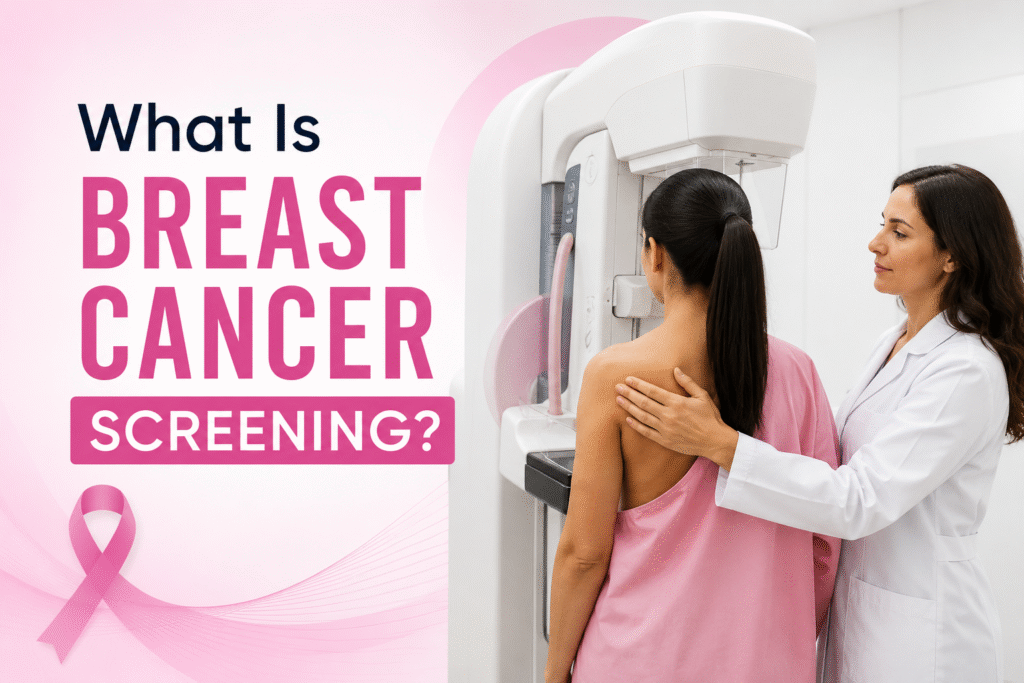
It is important to understand that screening is different from diagnosis. Screening looks for possible signs of cancer before symptoms develop, while diagnostic tests are performed when a woman has symptoms such as a breast lump or nipple discharge.
Routine breast cancer screening has contributed significantly to reducing breast cancer-related deaths by identifying cancers early.
Why Is Breast Cancer Screening Important?
Early detection is the key advantage of breast cancer screening. When breast cancer is found before it spreads, treatment outcomes are generally much better.
Some of the major benefits include:
- Detecting breast cancer before symptoms develop
- Improving survival rates
- Increasing treatment options
- Reducing the need for aggressive treatments
- Helping preserve breast tissue through breast-conserving surgery when appropriate
- Providing reassurance when screening results are normal
Many women diagnosed through routine screening have no symptoms, highlighting the importance of regular check-ups even when you feel healthy.
Who Should Get Breast Cancer Screening?
Screening recommendations depend on a woman’s age, overall health, and individual risk factors.
Women at Average Risk
Women without a personal history of breast cancer or significant genetic risk generally follow these recommendations:
- Ages 40–44: Discuss the benefits and risks of starting annual mammograms with your doctor.
- Ages 45–54: Annual mammograms are generally recommended.
- Age 55 and older: Mammograms every one to two years may be appropriate based on overall health and personal preference.
Regular consultations with your healthcare provider can help determine the most suitable screening schedule.
Women at High Risk
Women with certain risk factors may require earlier or more frequent screening.
High-risk factors include:
- Strong family history of breast cancer
- BRCA1 or BRCA2 gene mutations
- Previous chest radiation therapy at a young age
- Personal history of breast cancer
- Certain inherited genetic syndromes
- Dense breast tissue, depending on your doctor’s recommendation
These women may benefit from annual breast MRI in addition to mammography.
Types of Breast Cancer Screening Tests
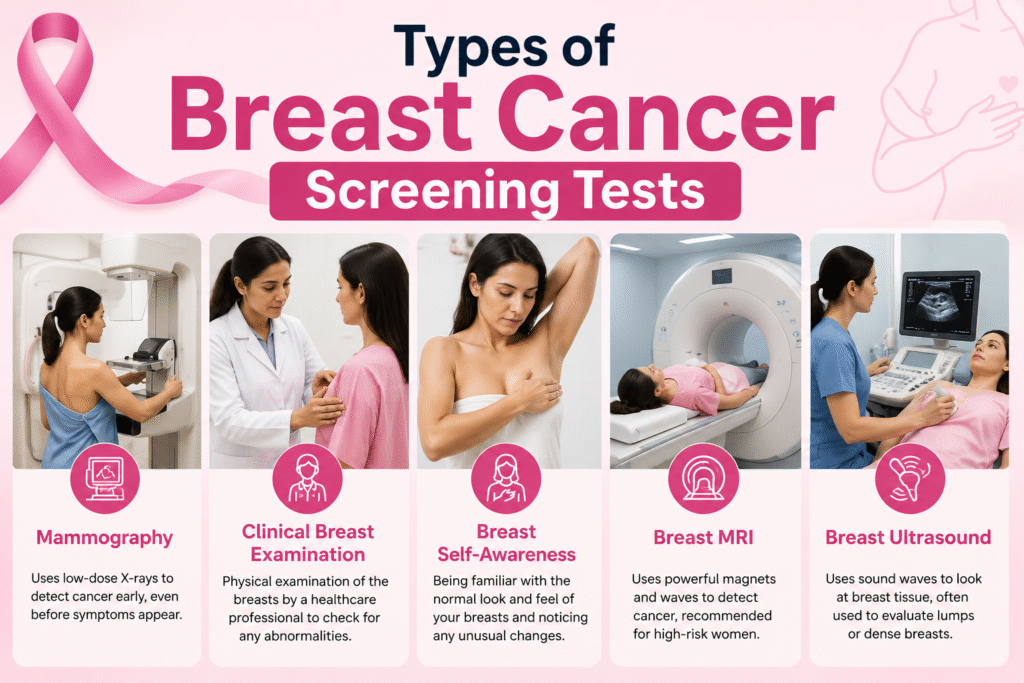
Several screening methods are available, each serving a specific purpose.
Mammography
A mammogram is the most widely recommended and effective screening test for breast cancer.
It uses low-dose X-rays to detect small abnormalities that may not yet be felt during a physical examination.
Modern mammography includes:
- Digital mammography
- Three-dimensional (3D) mammography or tomosynthesis
These advanced imaging techniques improve cancer detection while reducing false-positive results in many women.
Clinical Breast Examination
A clinical breast examination is performed by a healthcare professional who carefully checks the breasts and underarm area for any unusual lumps or changes.
Although it does not replace mammography, it may help identify abnormalities that require further evaluation.
Breast Self-Awareness
Women should be familiar with the normal appearance and feel of their breasts.
Rather than performing rigid monthly self-examinations, current recommendations encourage breast self-awareness, which means noticing changes such as:
- New lump
- Skin thickening
- Nipple discharge
- Persistent pain
- Changes in breast size or shape
Any unusual change should be evaluated by a healthcare professional promptly.
Breast MRI
Breast MRI is a highly sensitive imaging test often recommended for women at high risk of breast cancer.
It is typically used alongside mammography rather than replacing it.
MRI can detect cancers that may not be visible on a mammogram, particularly in women with dense breast tissue or inherited genetic risks.
Breast Ultrasound
Breast ultrasound uses sound waves to examine breast tissue.
It is commonly used to:
- Evaluate abnormalities found on mammography
- Assess breast lumps
- Supplement mammography in women with dense breasts
Ultrasound is not usually recommended as a routine screening test for women at average risk.
Signs That Should Prompt Immediate Medical Evaluation
Even if you undergo regular breast cancer screening, you should seek medical attention if you notice:
- A new breast lump
- Lump in the armpit
- Bloody or unusual nipple discharge
- Skin dimpling
- Persistent breast pain
- Swelling of part or all of the breast
- Changes in breast size or shape
- Inverted nipple
- Redness or thickened skin
These symptoms do not always indicate cancer but should never be ignored.
Risk Factors That Increase the Need for Regular Screening
Several factors increase a woman’s risk of developing breast cancer.
These include:
- Increasing age
- Family history of breast cancer
- BRCA gene mutations
- Obesity
- Alcohol consumption
- Smoking
- Physical inactivity
- Hormone replacement therapy
- Early onset of menstruation
- Late menopause
Women with multiple risk factors should discuss personalized screening plans with their healthcare provider.
How to Prepare for a Mammogram
Preparing for a mammogram is simple and can improve the accuracy of the examination.
Here are a few helpful tips:
- Avoid deodorants, perfumes, powders, or lotions on the day of the test.
- Wear comfortable two-piece clothing.
- Schedule your appointment after your menstrual period if your breasts tend to be tender.
- Bring previous mammogram reports for comparison if available.
- Inform your healthcare provider if you are pregnant or breastfeeding.
The procedure typically takes only a few minutes.
What Happens If a Screening Test Is Abnormal?
An abnormal screening result does not necessarily mean you have breast cancer.
Your doctor may recommend additional tests such as:
- Additional mammogram views
- Breast ultrasound
- Breast MRI
- Needle biopsy
Many abnormal findings are eventually found to be non-cancerous conditions such as cysts or benign breast changes.
Prompt follow-up helps ensure an accurate diagnosis.
Can Breast Cancer Be Prevented?
Although breast cancer cannot always be prevented, healthy lifestyle choices may reduce the risk.
Consider the following measures:
- Maintain a healthy body weight
- Exercise regularly
- Eat a balanced diet rich in fruits and vegetables
- Limit alcohol intake
- Avoid smoking
- Breastfeed when possible
- Attend regular breast cancer screening appointments
- Follow your doctor’s recommendations if you have increased genetic risk
Combining healthy habits with regular screening offers the best opportunity for early detection.
Frequently Asked Questions
Is breast cancer screening painful?
Most women experience only mild discomfort during a mammogram. The compression lasts only a few seconds and helps produce clearer images.
At what age should women start breast cancer screening?
Women at average risk should discuss starting screening around age 40 with their healthcare provider. Women at higher risk may need earlier screening.
How often should a mammogram be done?
The frequency depends on age and individual risk factors. Many women benefit from annual screening between ages 45 and 54, while older women may continue every one to two years based on medical advice.
Is breast cancer screening safe?
Yes. Mammography uses a very low dose of radiation, and its benefits in detecting breast cancer early greatly outweigh the minimal risks.
Can young women develop breast cancer?
Yes. Although breast cancer is more common in older women, younger women can also develop the disease, particularly if they have inherited genetic mutations or a strong family history.
Does every breast lump mean cancer?
No. Many breast lumps are benign, such as cysts or fibroadenomas. However, every new breast lump should be evaluated by a healthcare professional.
Conclusion
Regular breast cancer screening plays a crucial role in detecting breast cancer at an early stage, often before symptoms appear. Following recommended screening guidelines based on your age, family history, and individual risk factors can improve the chances of successful treatment and better long-term outcomes.
If you notice any changes in your breasts or are due for a screening examination, do not delay seeking medical advice. Consulting an experienced medical oncologist or breast cancer specialist can help you understand your risk, choose the appropriate screening tests, and receive timely care if needed.
Early detection saves lives—make breast cancer screening an important part of your preventive healthcare routine.